
 WikiCards
 Play on iPhone nowFree in Safari. Add it to your Home Screen.Play
WikiCards · Card list · Science cards · Low-Frequency Array
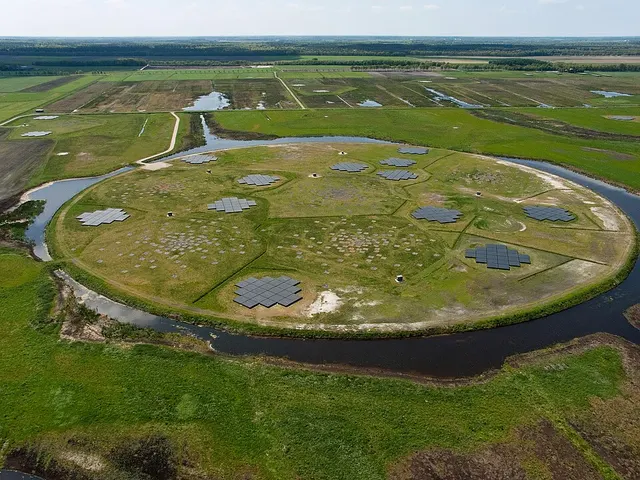
Common card · Science
Low-Frequency Array, a Common card
The Low-Frequency Array is a large radio telescope, with an antenna network located mainly in the Netherlands, and spreading across 7 other European countries as of 2019.
- Rarity
- Common
- Domain
- Science
- ATK
- 72
- DEF
- 64
- Power
- 136
- Wikipedia reads a year
- 8,700
Power 136 (ATK + DEF): stronger than 70 % of WikiCards cards.
Low-Frequency Array quiz: 3 questions
Three questions on the Low-Frequency Array card, the way WikiCards duels ask them. Pick an answer, the facts are just below.
In which decade?
The Low-Frequency Array is a large radio telescope, with an antenna network located mainly in the Netherlands, and spreading across 7 other European countries as of ____.
Answer
2010s. The Low-Frequency Array is a large radio telescope, with an antenna network located mainly in the Netherlands, and spreading across 7 other European countries as of 2019. From the Low-Frequency Array article on Wikipedia.
Which of these cards hits hardest (highest ATK)?
Answer
Death and culture. Death and culture 75 · Low-Frequency Array 72 · Jamshid al-Kashi 68 · Banded palm civet 65 ATK in WikiCards.
Which of these Wikipedia articles is read the most in a year?
Answer
Emmanuel Le Roy Ladurie. Emmanuel Le Roy Ladurie 12,000 · Low-Frequency Array 8,700 · Foam latex 6,000 · Georg Friedrich Grotefend 4,500 Wikipedia reads over a year.
In a duel, each round asks a question like these about the opposing card, with 15 seconds to answer.
The facts on the card
The card carries these facts from its Wikipedia article.
- Originally designed and built by ASTRON, the Netherlands Institute for Radio Astronomy, it was first opened by Queen Beatrix of The Netherlands in 2010, and has since been operated by ASTRON on behalf first of the International LOFAR Telescope partnership and now of the LOFAR ERIC by ASTRON.
- LOFAR consists of a vast array of omnidirectional antennas using a modern concept, in which the signals from the separate antennas are not connected directly electrically to act as a single large antenna, as they are in most array antennas.
- Instead, the LOFAR dipole antennas are distributed in stations, within which the antenna signals can be partly combined in analogue electronics, then digitised, then combined again across the full station.
Why it is Common
Rarity in WikiCards follows a year of Wikipedia page views: the most read articles become Epic and Legendary cards. The Low-Frequency Array article was read about 8,700 times in a year. ATK comes from the length of the article and DEF from its quality, so this card hits with 72 and blocks with 64: each hit it takes is cut by 26 %.
How to get Low-Frequency Array
Open packs. Each pack holds five cards drawn from real Wikipedia articles, the rarest last, and the fifth card is always Rare or better. The odds are shown in the game. A free pack arrives every hour and two can wait, and the Coins you win in duels buy more packs.
More Science cards





Cards close in power
The cards just above and just below Low-Frequency Array in the power ranking, all domains together.
- SarratCommon · Society · ATK 70 DEF 66
- Ace MagashuleCommon · History · ATK 71 DEF 65
- Banded palm civetCommon · Nature · ATK 65 DEF 71
- Central Park West Historic DistrictCommon · History · ATK 69 DEF 67
- William ap ThomasCommon · History · ATK 65 DEF 71
- Martin EvansCommon · History · ATK 70 DEF 66
Card lists
- Wikipedia quizNew questions every day
- All cards from A to ZEvery card, by name
- Science cards
- Legendary cards
- Tier listS and A tiers by power (ATK + DEF)
Credits
Text : Wikipedia, Low-Frequency Array (revision), CC BY-SA 4.0. Photo : LOFAR / ASTRON, CC BY 3.0, Wikimedia Commons.
