
 WikiCards
 Play on iPhone nowFree in Safari. Add it to your Home Screen.Play
WikiCards · Card list · Science cards · Inverse-square law
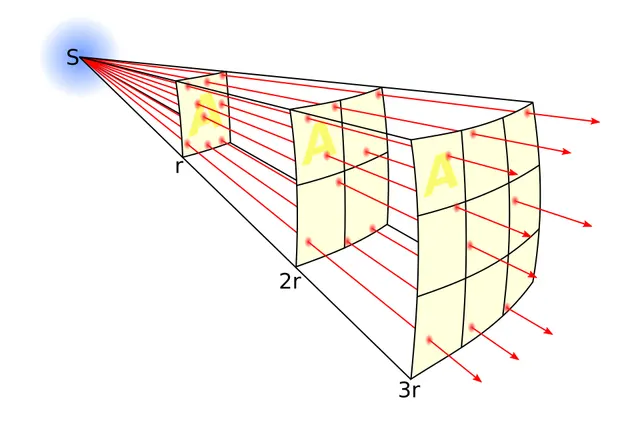
Uncommon card · Science
Inverse-square law, an Uncommon card
In physical science, an inverse-square law is any scientific law stating that the observed "intensity" of a specified physical quantity is inversely proportional to the square of the distance from the source of that physical quantity.
- Rarity
- Uncommon
- Domain
- Science
- ATK
- 69
- DEF
- 46
- Power
- 115
- Wikipedia reads a year
- 140,000
Power 115 (ATK + DEF): stronger than 55 % of WikiCards cards.
Inverse-square law quiz: 3 questions
Three questions on the Inverse-square law card, the way WikiCards duels ask them. Pick an answer, the facts are just below.
Find the missing word
The ______ cause for this can be understood as geometric dilution corresponding to point-source radiation into three-dimensional space.
Answer
fundamental. The fundamental cause for this can be understood as geometric dilution corresponding to point-source radiation into three-dimensional space. From the Inverse-square law article on Wikipedia.
Which of these Wikipedia articles is read the most in a year?
Answer
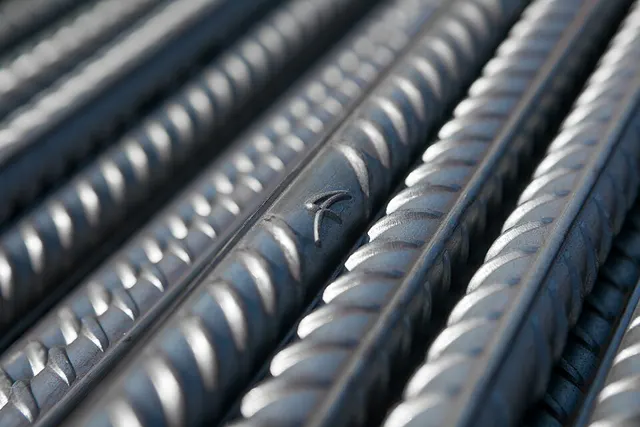
Dew point. Dew point 360,000 · Inverse-square law 140,000 · Carbon steel 110,000 · Björn Gunnlaugsson 790 Wikipedia reads over a year.
In a duel, each round asks a question like these about the opposing card, with 15 seconds to answer.
The facts on the card
The card carries these facts from its Wikipedia article.
- The fundamental cause for this can be understood as geometric dilution corresponding to point-source radiation into three-dimensional space.
- Radar energy expands during both the signal transmission and the reflected return, so the inverse square for both paths means that the radar will receive energy according to the inverse fourth power of the range.
- To prevent dilution of energy while propagating a signal, certain methods can be used such as a waveguide, which acts like a canal does for water, or how a gun barrel restricts hot gas expansion to one dimension in order to prevent loss of energy transfer to a bullet.
Why it is Uncommon
Rarity in WikiCards follows a year of Wikipedia page views: the most read articles become Epic and Legendary cards. The Inverse-square law article was read about 140,000 times in a year. ATK comes from the length of the article and DEF from its quality, so this card hits with 69 and blocks with 46: each hit it takes is cut by 18 %.
How to get Inverse-square law
Open packs. Each pack holds five cards drawn from real Wikipedia articles, the rarest last, and the fifth card is always Rare or better. The odds are shown in the game. A free pack arrives every hour and two can wait, and the Coins you win in duels buy more packs.
More Science cards


Cards close in power
The cards just above and just below Inverse-square law in the power ranking, all domains together.
- Saint Benedict MedalUncommon · Society · ATK 62 DEF 53
- Sérgio MendesUncommon · Arts · ATK 65 DEF 50
- Bathypterois grallatorUncommon · Nature · ATK 61 DEF 54
- DPR IanUncommon · Arts · ATK 63 DEF 52
- East SlavsUncommon · Nature · ATK 66 DEF 49
- European seabassUncommon · Nature · ATK 61 DEF 54
Card lists
- Wikipedia quizNew questions every day
- All cards from A to ZEvery card, by name
- Science cards
- Legendary cards
- Tier listS and A tiers by power (ATK + DEF)
Credits
Text : Wikipedia, Inverse-square law (revision), CC BY-SA 4.0. Photo : Borb ( talk · contribs ), CC BY-SA 3.0, Wikimedia Commons.
