
 WikiCards
 Play on iPhone nowFree in Safari. Add it to your Home Screen.Play
WikiCards · Card list · Science cards · Hysteresis
Uncommon card · Science
Hysteresis, an Uncommon card
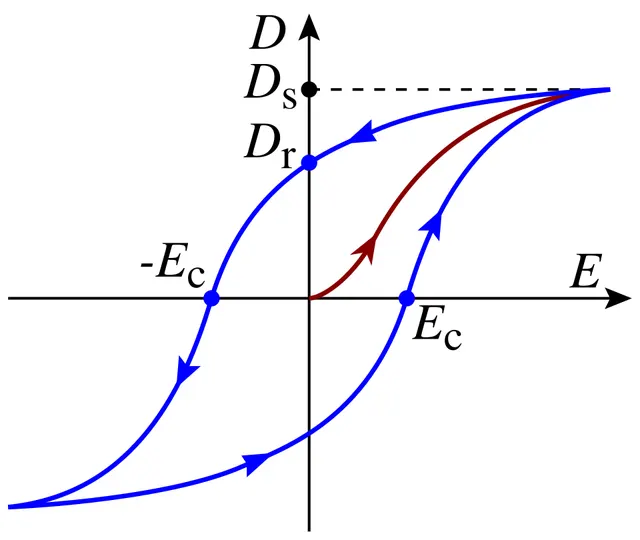
Hysteresis is the dependence of the state of a system on its history.
- Rarity
- Uncommon
- Domain
- Science
- ATK
- 81
- DEF
- 77
- Power
- 158
- Wikipedia reads a year
- 160,000
Power 158 (ATK + DEF): stronger than 80 % of WikiCards cards.
The facts on the card
The card carries these facts from its Wikipedia article.
- For example, a magnet may have more than one possible magnetic moment in a given magnetic field, depending on how the field changed in the past.
- Such a system is called hysteretic.
- Plots of a single component of the moment often form a loop or hysteresis curve, where there are different values of one variable depending on the direction of change of another variable.
Why it is Uncommon
Rarity in WikiCards follows a year of Wikipedia page views: the most read articles become Epic and Legendary cards. The Hysteresis article was read about 160,000 times in a year. ATK comes from the length of the article and DEF from its quality, so this card hits with 81 and blocks with 77: each hit it takes is cut by 31 %.
How to get Hysteresis
Open packs. Each pack holds five cards drawn from real Wikipedia articles, the rarest last, and the fifth card is always Rare or better. The odds are shown in the game. A free pack arrives every hour and two can wait, and the Coins you win in duels buy more packs.
More Science cards







Cards close in power
The cards just above and just below Hysteresis in the power ranking, all domains together.
- Calcium chlorideUncommon · Science · ATK 75 DEF 83
- Daniel PassarellaUncommon · Society · ATK 74 DEF 84
- David PastrňákUncommon · Society · ATK 80 DEF 78
- Sarah VaughanUncommon · History · ATK 77 DEF 81
- Tyson ChandlerUncommon · Society · ATK 77 DEF 81
- Évariste GaloisUncommon · Science · ATK 74 DEF 84
Card lists
- Wikipedia quizNew questions every day
- All cards from A to ZEvery card, by name
- Science cards
- Legendary cards
- Tier listS and A tiers by power (ATK + DEF)
Credits
Text : Wikipedia, Hysteresis (revision), CC BY-SA 4.0. Photo : Ndthe, CC BY-SA 3.0, Wikimedia Commons.
