
 WikiCards
 Play on iPhone nowFree in Safari. Add it to your Home Screen.Play
WikiCards · Card list · Science cards · History of subatomic physics
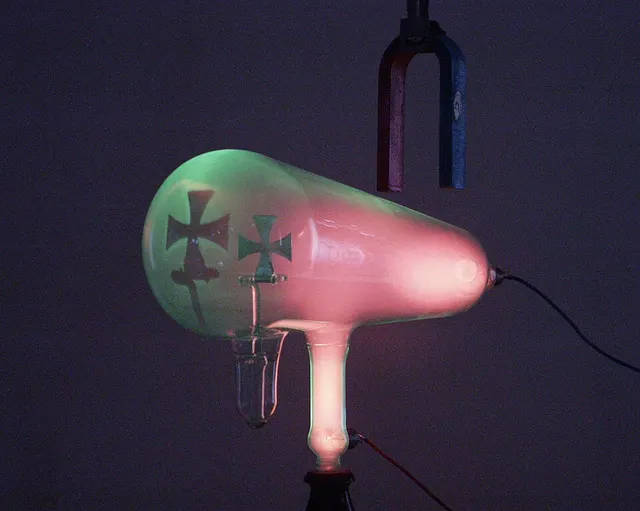
Common card · Science
History of subatomic physics, a Common card
The idea that matter consists of smaller particles and that there exists a limited number of sorts of primary, smallest particles in nature has existed in natural philosophy at least since the 6th century BC.
- Rarity
- Common
- Domain
- Science
- ATK
- 72
- DEF
- 61
- Power
- 133
- Wikipedia reads a year
- 5,500
Power 133 (ATK + DEF): stronger than 65 % of WikiCards cards.
History of subatomic physics quiz: 3 questions
Three questions on the History of subatomic physics card, the way WikiCards duels ask them. Pick an answer, the facts are just below.
Find the missing word
Even ______ particles can decay or collide destructively, they can cease to exist and create particles in result.
Answer
elementary. Even elementary particles can decay or collide destructively, they can cease to exist and create particles in result. From the History of subatomic physics article on Wikipedia.
Which of these cards hits hardest (highest ATK)?
Answer
16th Uttar Pradesh Assembly. 16th Uttar Pradesh Assembly 87 · History of subatomic physics 72 · William Swainson 68 · Nathaniel Wallich 65 ATK in WikiCards.
Which of these Wikipedia articles is read the most in a year?
Answer
Ilham Tohti. Ilham Tohti 13,000 · William Swainson 8,700 · History of subatomic physics 5,500 · Simeprevir 3,300 Wikipedia reads over a year.
In a duel, each round asks a question like these about the opposing card, with 15 seconds to answer.
The facts on the card
The card carries these facts from its Wikipedia article.
- Such ideas gained physical credibility beginning in the 19th century, but the concept of "elementary particle" underwent some changes in its meaning: notably, modern physics no longer deems elementary particles indestructible.
- Even elementary particles can decay or collide destructively, they can cease to exist and create particles in result.
- Increasingly small particles have been discovered and researched: they include molecules, which are constructed of atoms, that in turn consist of subatomic particles, namely atomic nuclei and electrons.
Why it is Common
Rarity in WikiCards follows a year of Wikipedia page views: the most read articles become Epic and Legendary cards. The History of subatomic physics article was read about 5,500 times in a year. ATK comes from the length of the article and DEF from its quality, so this card hits with 72 and blocks with 61: each hit it takes is cut by 24 %.
How to get History of subatomic physics
Open packs. Each pack holds five cards drawn from real Wikipedia articles, the rarest last, and the fifth card is always Rare or better. The odds are shown in the game. A free pack arrives every hour and two can wait, and the Coins you win in duels buy more packs.
More Science cards


Cards close in power
The cards just above and just below History of subatomic physics in the power ranking, all domains together.
- South HorizonsCommon · Arts · ATK 64 DEF 69
- Henri FarmanCommon · History · ATK 66 DEF 67
- List of tallest buildings in MobileCommon · History · ATK 70 DEF 63
- Waskom, TexasCommon · Society · ATK 65 DEF 68
- Maya ForestCommon · Nature · ATK 67 DEF 66
- Ahmad JalayirCommon · History · ATK 69 DEF 64
Card lists
- Wikipedia quizNew questions every day
- All cards from A to ZEvery card, by name
- Science cards
- Legendary cards
- Tier listS and A tiers by power (ATK + DEF)
Credits
Text : Wikipedia, History of subatomic physics (revision), CC BY-SA 4.0. Photo : Zátonyi Sándor, (ifj.), CC BY-SA 3.0, Wikimedia Commons.
