
 WikiCards
 Play on iPhone nowFree in Safari. Add it to your Home Screen.Play
WikiCards · Card list · Science cards · Dirichlet's theorem on arithmetic progressions
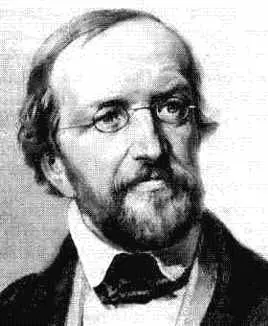
Uncommon card · Science
Dirichlet's theorem on arithmetic progressions, an Uncommon card
In number theory, Dirichlet's theorem, also called the Dirichlet prime number theorem, states that for any two positive coprime integers a and d, there are infinitely many primes of the form a + nd, where n is also a positive integer.
- Rarity
- Uncommon
- Domain
- Science
- ATK
- 68
- DEF
- 30
- Power
- 98
- Wikipedia reads a year
- 29,000
Power 98 (ATK + DEF): stronger than 40 % of WikiCards cards.
Dirichlet's theorem on arithmetic progressions quiz: 3 questions
Three questions on the Dirichlet's theorem on arithmetic progressions card, the way WikiCards duels ask them. Pick an answer, the facts are just below.
Find the missing word
The theorem ______ Euclid's theorem that there are infinitely many prime numbers.
Answer
extends. The theorem extends Euclid's theorem that there are infinitely many prime numbers. From the Dirichlet's theorem on arithmetic progressions article on Wikipedia.
Which of these cards hits hardest (highest ATK)?
Answer
Dirichlet's theorem on arithmetic progressions. Dirichlet's theorem on arithmetic progressions 68 · Richard Dedekind 63 · Tau 60 · Honda N-WGN 56 ATK in WikiCards.
Which of these Wikipedia articles is read the most in a year?
Answer
Tau. Tau 61,000 · Richard Dedekind 40,000 · Dirichlet's theorem on arithmetic progressions 29,000 · Honda N-WGN 23,000 Wikipedia reads over a year.
In a duel, each round asks a question like these about the opposing card, with 15 seconds to answer.
The facts on the card
The card carries these facts from its Wikipedia article.
- In other words, there are infinitely many primes that are congruent to a modulo d. The numbers of the form a + nd form an arithmetic progression a, a + d, a + 2 d, a + 3 d, …, and Dirichlet's theorem states that this sequence contains infinitely many prime numbers.
- The theorem extends Euclid's theorem that there are infinitely many prime numbers.
- Stronger forms of Dirichlet's theorem state that for any such arithmetic progression, the sum of the reciprocals of the prime numbers in the progression diverges and that different such arithmetic progressions with the same modulus have approximately the same proportions of primes.
Why it is Uncommon
Rarity in WikiCards follows a year of Wikipedia page views: the most read articles become Epic and Legendary cards. The Dirichlet's theorem on arithmetic progressions article was read about 29,000 times in a year. ATK comes from the length of the article and DEF from its quality, so this card hits with 68 and blocks with 30: each hit it takes is cut by 12 %.
How to get Dirichlet's theorem on arithmetic progressions
Open packs. Each pack holds five cards drawn from real Wikipedia articles, the rarest last, and the fifth card is always Rare or better. The odds are shown in the game. A free pack arrives every hour and two can wait, and the Coins you win in duels buy more packs.
More Science cards





Cards close in power
The cards just above and just below Dirichlet's theorem on arithmetic progressions in the power ranking, all domains together.
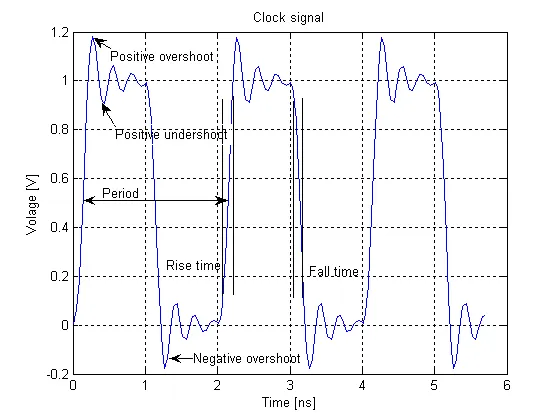
- Clock signalUncommon · Science · ATK 63 DEF 35
- USS Miguel KeithUncommon · History · ATK 57 DEF 41
- BoomUncommon · Society · ATK 50 DEF 48
- Bihari languagesUncommon · Society · ATK 59 DEF 39
- Nate BoyerUncommon · Society · ATK 58 DEF 40
- Renault R26Uncommon · Society · ATK 60 DEF 38
Card lists
- Wikipedia quizNew questions every day
- All cards from A to ZEvery card, by name
- Science cards
- Legendary cards
- Tier listS and A tiers by power (ATK + DEF)
Credits
Text : Wikipedia, Dirichlet's theorem on arithmetic progressions (revision), CC BY-SA 4.0. Photo : Unknown author Unknown author, Public domain, Wikimedia Commons.
