
 WikiCards
 Play on iPhone nowFree in Safari. Add it to your Home Screen.Play
WikiCards · Card list · Nature cards · Central Asian Orogenic Belt
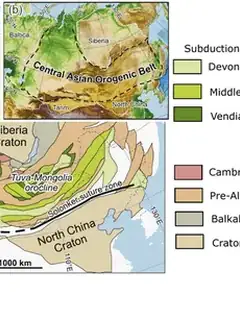
Common card · Nature
Central Asian Orogenic Belt, a Common card
The Central Asian Orogenic Belt, also called the Altaids, is one of the world's largest Phanerozoic accretionary orogens, and thus a leading laboratory of geologically recent crustal growth.
- Rarity
- Common
- Domain
- Nature
- ATK
- 74
- DEF
- 86
- Power
- 160
- Wikipedia reads a year
- 3,200
Ranked #1,789 of the 3,000 cards of the base set by power (ATK + DEF).
Central Asian Orogenic Belt quiz: 3 questions
Three questions on the Central Asian Orogenic Belt card, the way WikiCards duels ask them. Pick an answer, the facts are just below.
Find the missing word
It formed by ocean closures during ______ to the late Phanerozoic time, from around 750 to 150 Ma.
Answer
Neoproterozoic. It formed by ocean closures during Neoproterozoic to the late Phanerozoic time, from around 750 to 150 Ma. From the Central Asian Orogenic Belt article on Wikipedia.
Which of these cards hits hardest (highest ATK)?
Answer
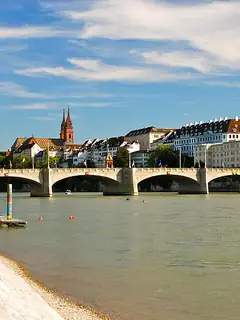
Rhine. Rhine 86 · Schistosoma mansoni 78 · Central Asian Orogenic Belt 74 · Cape Wrath 71 ATK in WikiCards.
Which of these Wikipedia articles is read the most in a year?
Answer
Schistosoma mansoni. Schistosoma mansoni 25,000 · 1982 Atlantic hurricane season 14,000 · Budj Bim heritage areas 4,700 · Central Asian Orogenic Belt 3,200 Wikipedia reads over a year.
In a duel, each round asks a question like these about the opposing card, with 15 seconds to answer.
The facts on the card
The card carries these facts from its Wikipedia article.
- The orogenic belt is bounded by the East European Craton and the North China Craton in the Northwest-Southeast direction, as well as Siberia Craton and Tarim Craton in the Northeast-Southwest direction.
- It formed by ocean closures during Neoproterozoic to the late Phanerozoic time, from around 750 to 150 Ma.
- Like many other accretionary orogenic belts, the Central Asian Orogenic Belt consists of a huge amount of magmatic arcs, arc-related basins, accretionary complexes, seamounts, continental fragments and ophiolites.
Why it is Common
Rarity in WikiCards follows a year of Wikipedia page views: the most read articles become Epic and Legendary cards. The Central Asian Orogenic Belt article was read about 3,200 times in a year. ATK comes from the length of the article and DEF from its quality, so this card hits with 74 and blocks with 86: each hit it takes is cut by 34 %.
How to get Central Asian Orogenic Belt
Open packs. Each pack holds five cards drawn from real Wikipedia articles, the rarest last, and the fifth card is always Rare or better. The odds are shown in the game. A free pack arrives every hour and two can wait, and the Coins you win in duels buy more packs.
More Nature cards


Cards close in power
The cards just above and just below Central Asian Orogenic Belt in the power ranking, all domains together.
- Red and Purple Modernization ProjectCommon · Science · ATK 74 DEF 86
- IV CorpsCommon · Society · ATK 75 DEF 85
- Budj Bim heritage areasCommon · Nature · ATK 75 DEF 85
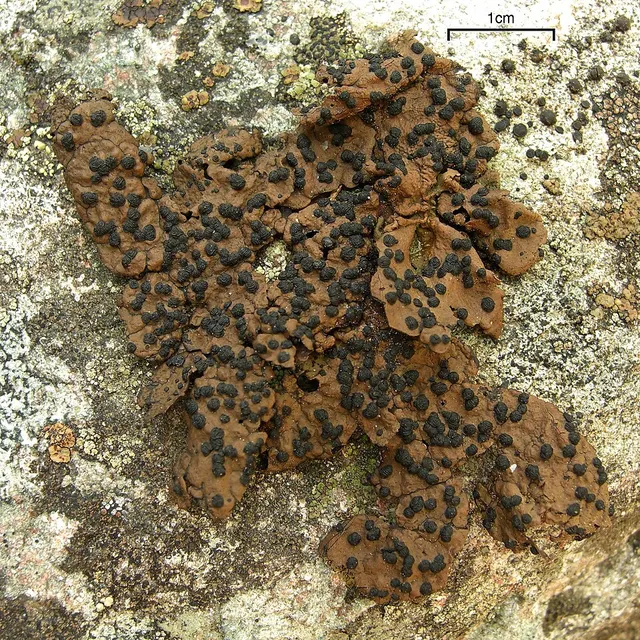
- UmbilicariaCommon · Nature · ATK 74 DEF 86
- Ancient Baths of AlaunaCommon · History · ATK 72 DEF 88
- Załęska Hałda-BrynówCommon · Society · ATK 77 DEF 83
Card lists
- Wikipedia quizNew questions every day
- All cards from A to ZEvery card, by name
- Nature cards
- Legendary cards
- Tier listS and A tiers by power (ATK + DEF)
Credits
Text : Wikipedia, Central Asian Orogenic Belt (revision), CC BY-SA 4.0. Photo : Wongtszyanyuki, CC BY-SA 4.0, Wikimedia Commons.
